A First Visit to a Community Craft Fair
A first visit to a community craft fair can feel easy, not sales-driven: find a comfortable pace, talk with makers naturally, and leave when you’re ready.
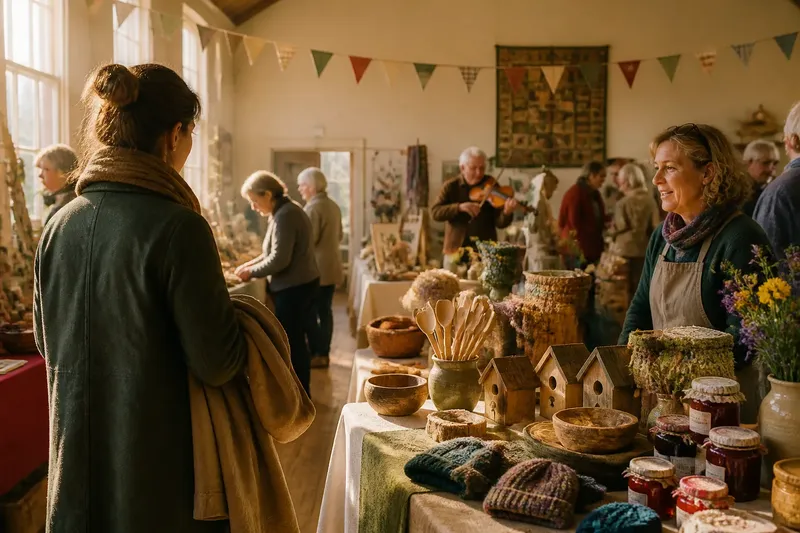
You arrive at the community hall with a coat over one arm, hear a fiddle from the far end, and see tables crowded with carved spoons, knitted hats, jars of jam, and hand-lettered price cards. A first visit to a community craft fair can be a pleasant hour—or a quick look around—without becoming a shopping mission. The trick is to choose a pace that fits your reason for coming.
These fairs often hold more than stalls. They can be a place to notice what people in the county make, learn how a local group works, or simply spend a little time among neighbors. You don’t need to buy something, know the right terms, or arrive with a conversation ready. Use the plan that suits the day you’re having, then change it if the room suggests something else.
Choose your visit by what you want from the room
A useful plan starts with your circumstances, not a route through every stall. The same fair can feel lively to one visitor and tiring to another. Pick the situation closest to yours.
- If you’re curious but short on time: Make one unhurried circuit. Notice the mix of materials and work, pause at anything that catches your eye, and leave when you’ve had a good look. This fits a brief visit because it gives you a sense of the fair without asking you to see every table.
- If you’d like to meet local makers: Choose one or two stalls where the maker appears free to talk. Ask about a piece that interests you, then give the conversation room to end naturally. This works better than trying to introduce yourself to everyone; a few attentive exchanges can make the room feel less anonymous.
- If crowds or noise wear you out: Visit at a quieter-feeling moment if the event information gives you a choice, and stay near an edge where you can pause or step outside. If the room is already busy, a short lap is a complete visit. There is no need to wait until you feel overwhelmed before taking a break.
- If you came with a child or companion: Agree on a simple meeting point and let each person choose a stall or display to linger over. This gives the visit a shared shape without requiring everyone to enjoy the same things.
- If you’re considering a purchase: Look broadly first, then return to a piece you still remember. That pause helps you decide whether you want the object itself, rather than the feeling of needing to take something home.
- If you’re mainly there to support a community event: You can enjoy the displays, read the notices, and learn what local groups are doing. If you want to contribute, check whether the organizers have a donation box, refreshments, or another option; buying from a maker is not the only way to take part.
These approaches aren’t rules. You might arrive hoping to browse and find yourself chatting, or plan to stay briefly and discover a demonstration. Let your attention make the next choice.
Start conversations with the work, not a sales pitch
A maker’s table gives you an easy subject. Instead of trying to invent a clever opener, point to something you genuinely notice. “How did you get that texture?” or “What kind of wood is this?” invites a specific answer. If you’re looking at knitted goods, you might ask what yarn the maker chose; for prints, ask what inspired the colors or process.
Keep the question open and the tone relaxed. A maker may be demonstrating, serving a customer, or watching several things at once. If they answer briefly, smile and keep browsing. If they offer more detail, listen and follow the thread that interests you. Silence isn’t a problem to solve; you can simply look at the work.
Imagine you stop at a table of small wooden birdhouses and ask how the maker chooses which woods to combine. They explain that the contrasting pieces come from different offcuts, then point out a tiny variation in each roof. You thank them, take a closer look, and move on without buying anything. The exchange has given you a little insight into the craft, and both of you can continue with the fair.
Compliments can open a door, but a question about the work often gives the maker more to respond to. “That blue is lovely” is kind; “How did you get that blue glaze?” makes room for a story. Avoid treating a conversation as an obligation to buy. A friendly exchange is enough.
Browse in a way that leaves room to change your mind
At a compact fair, a slow circuit usually beats a hurried march from one end to the other. Walk where there is space, pause without blocking a neighboring table, and give yourself permission to circle back. You may notice details on a second look that were hidden by a crowd or another visitor’s conversation.
Before picking up an item, glance for a sign or ask the maker whether handling is welcome. Some pieces are sturdy; others may be delicate, unfinished, or arranged for display. If you do handle something, return it gently to its place. These small courtesies help everyone browse comfortably.
Prices and payment options may be displayed at the stall or explained by the maker. If you’re interested but uncertain, ask plainly. You can also say, “I’m going to look around and may come back.” That gives you space to compare pieces and gives the maker a clear answer. If you decide against buying, a simple thank-you is enough; you don’t need to explain your budget or apologize.
When you do choose an item, consider how you’ll use it, carry it, or give it as a gift. A small purchase that suits your life can be more satisfying than something chosen only because the fair feels special. And if nothing fits, leave with a memory, a new name for a local material, or a note about a maker whose work you’d like to see again.
Know when a short visit is the right visit
You don’t owe the fair a full afternoon. If your attention starts to drift, the room gets too loud, or you’ve seen what you came to see, it’s fine to go. A quick stop can still be meaningful, especially if you’ve paused to look closely or exchanged a few words.
For a longer visit, build in a change of pace. Step outside for air, find a seat if one is available, or have a drink from the refreshment table. Then decide whether you want another circuit. If you came with someone, check in rather than assuming they have the same energy. A shared outing works better when leaving is an available choice, not a test of endurance.
Before you go, you might thank an organizer or ask where the fair’s notices are posted. Some events are attached to a village hall, school, library, or community group, and a board near the entrance may list other local activities. You can take a photograph of a public notice if permitted, or simply remember the place to look next time.
What should you expect on a first visit?
Do I need to buy something to be welcome?
No. Browsing and asking a thoughtful question are normal parts of visiting. If you want to support a maker or organizer, choose an option that feels comfortable rather than treating a purchase as an entrance fee.
What should I say to a maker?
Ask about a material, technique, or detail you can see, such as how a basket’s pattern is formed or what makes two prints look different. If the maker is busy, wait for a lull or enjoy looking without interrupting.
How long should I stay?
Stay as long as the visit feels good to you, whether that means one circuit or a longer browse. A clear point to leave—after seeing a demonstration, for instance—can help if you prefer a defined plan.
Is it all right to come alone?
Yes. Moving at your own pace can make it easier to notice details and speak with makers when you feel ready. You can keep conversation brief, take a quiet break, or leave whenever you like.
Let the fair be a visit, not an assignment
A first visit to a community craft fair doesn’t need a checklist of stalls or a bag to bring home. Choose the kind of visit that suits your energy, let the work offer conversation, and decide your stopping point as you go. You may leave with a handmade mug, a good chat, or nothing but the sound of the hall settling behind you.
That last outcome still counts. You’ve seen what neighbors make and how a local room changes when people gather around their work. If you return, you’ll recognize a few faces or materials; if you don’t, the visit can remain complete on its own.