Why a Welcome Often Begins Before Anyone Speaks
A quiet welcome helps newcomers find a seat, follow local customs, and join a gathering without guessing or being put on the spot.
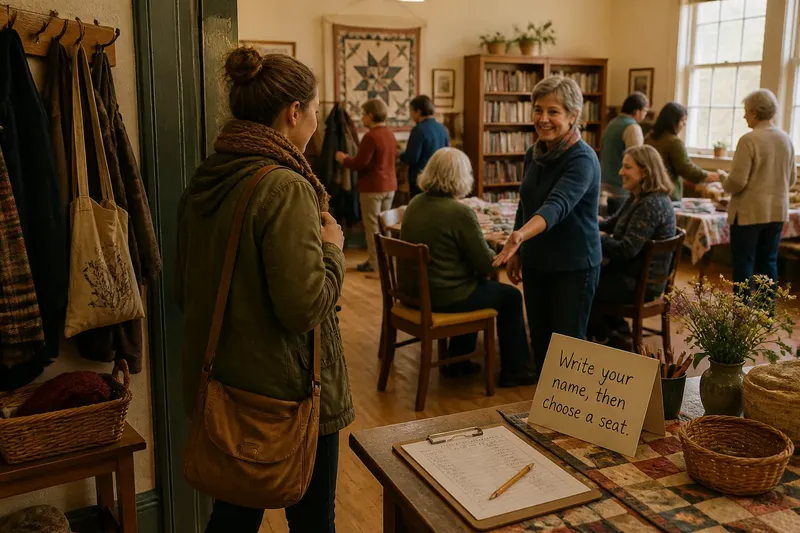
At a county hall, a newcomer pauses just inside the door as people turn toward the coat rack. Someone slides a chair away from the wall and points to the open place beside them. No conversation has started, yet the visitor knows where to go. A quiet welcome can begin with small, clear gestures like that.
These cues matter at a quilting circle, parish supper, library workshop, or neighborhood meeting. They do not replace conversation; they make its beginning easier by answering practical questions: Where can I stand? Is this seat taken? What happens next? A welcoming room makes the next move visible without putting anyone on display.
Make the doorway easy to read
A doorway can become a bottleneck when people stop just inside to scan the room. A volunteer with a clipboard, a conversation between old friends, and a pile of coats can leave no clear route. A newcomer should not have to interrupt the room just to learn where to put a bag.
Look at the entrance as if you had never been there. Is the path to the activity clear? Can someone leave a coat without crossing through a conversation? A handwritten sign can help if it points to a specific place: “Coats on the hooks by the kitchen” says more than “Please make yourself at home.”
A clear path, a visible coat stand, and an easy-to-find sign-in table matter more than a polished display. When space is tight, a host can step aside instead of holding the doorway while talking. The route stays open, and visitors can choose whether to pause or keep moving.
Offer a seat without assigning a social role
An empty chair is not always an invitation. It may be reserved for someone who stepped out, or it may sit within a circle that feels private to a newcomer. Draw out a chair, indicate the open spot, then leave room for the person to decide.
Where the chair sits matters. A newcomer at the far edge of a crowded table may be included in name but unable to hear. A seat beside one or two people, with a clear view of the activity, offers a gentler entry. At a craft gathering, that might be near the worktable rather than in the middle of a group already sharing tools. At a community meal, it could be a place where someone can join the conversation or quietly observe.
Seating can signal what participation means. A circle may suggest that everyone is expected to speak, while a row facing a demonstration lets people listen without taking a turn. Neither arrangement is automatically welcoming or unwelcoming. The useful question is whether the room offers more than one comfortable way to take part.
Show the next step before it becomes a question
Local customs can be easy for regulars to follow and hard for visitors to infer. At a potluck, people may know that dishes go along one counter and plates are collected at another. At a repair workshop, participants may know where to sign in or whether to bring an item to the central table. Newcomers should not have to guess and then worry they guessed wrong.
A short sign, a visible tray, or a quiet point toward the right place can make the sequence clear. Keep directions brief and concrete. “Write your name here, then choose a seat” offers an easy next move. A long notice full of rules can make a casual gathering feel like an exam.
Say you are helping with an invented seed swap in a small library room. The door opens onto a table of seed packets, but no sign-in point is marked. You move a blank sheet and pencils to the table’s near corner, then add a note: “Write your name, then browse.” Visitors can now begin without interrupting the first conversation they see. The sign does not dictate how long they stay or what they take.
Let familiar objects do some of the explaining
Local life often has useful objects: a basket for spare gloves, a tray for shared tools, a bell by a serving counter, or a painted board showing which room is in use. Their placement can explain their purpose without a speech.
A basket tucked beneath a table may look like storage. Set it beside the doorway with a small “Borrow one” note, and it reads as an invitation. A stack of blank name tags can help people address one another, but only if a pen is nearby. A hall map is useful when it shows the washroom, accessible entrance, and activity room rather than every detail of the building.
Objects can reflect a place’s character without serving as decoration alone. A locally made sign, a familiar woven runner, or a noticeboard with current community announcements can suggest that the room belongs to people with ongoing lives. Keep practical information easy to see; atmosphere should support orientation, not compete with it.
Welcome without putting someone on display
Some newcomers want an introduction to the room. Others would rather settle in quietly before speaking. A group can leave both options open: greet the visitor warmly, show the basics, and avoid a round of public introductions unless it is genuinely part of the gathering.
Watch for cues rather than deciding what someone needs from their appearance. If a person pauses near the edge, point out an open chair. If they ask where the tea is, answer that question before launching into the group’s history. A helpful gesture is not a test of friendliness; it gives someone control over their next move.
Accessibility belongs in a quiet welcome. Keep routes clear for mobility aids, leave room around tables, and make printed directions readable from where people need them. If a room has stairs or a heavy door, explain an available alternative without making visitors ask in front of everyone. For changes involving building safety or access requirements, follow the venue’s guidance and consult a qualified professional where needed.
How can a quiet welcome feel natural?
Should every visitor be greeted at the door?
A brief greeting can help, but visitors should not have to stop for a conversation before entering. Acknowledge their arrival, keep the way clear, and let them choose whether to pause.
What if the room is already full?
Show a newcomer where they can stand or sit without squeezing into a crowded cluster. If there is no comfortable space left, say so plainly and offer a useful next option, such as joining the next activity or waiting in a nearby open area.
How can people tell whether a seat is available?
Leave an open chair visibly open instead of filling it with coats or supplies. A small gesture toward the seat answers the question more clearly than expecting a newcomer to interrupt a conversation.
Do signs make a gathering feel impersonal?
Not when they answer practical questions in a warm, direct voice. A short note about coats, refreshments, or sign-in can free people to spend their attention on one another.
Notice what the room asks a newcomer to do
Before people arrive, make one slow pass from the entrance to the activity. Notice where a visitor might hesitate, what they may need to carry, and which local custom is visible only to regulars. Then fix the confusing point that would otherwise require a question. The goal is not to choreograph every arrival; it is to remove needless guesswork.
A county gathering can feel like itself without expecting newcomers to know its customs in advance. A chair drawn into the circle, a path left open, or a clear place for a coat gives someone a way to join on their own terms. When the next step is easy to see, people can spend less attention on where to go and more on the gathering itself.